
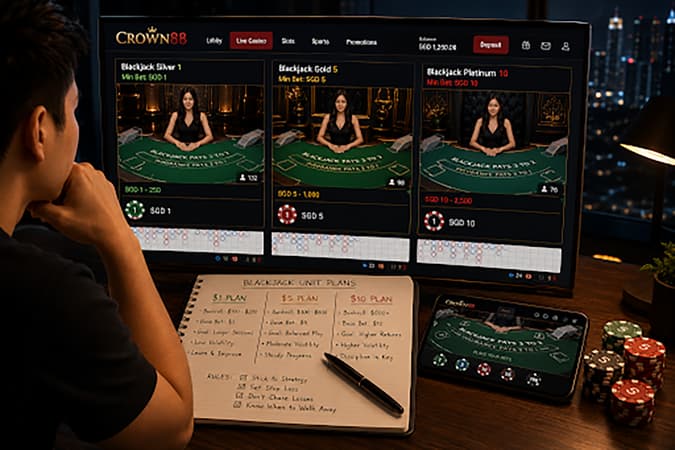
Blackjack for Small Bankroll Players on Crown88: Comparing $1, $5, and $10 Unit Plans
Small bankroll players often enjoy smoother blackjack sessions when they focus on disciplined unit sizing and long-term bankroll protection instead of aggressive betting progression.
A lot of blackjack players assume bankroll problems only happen after bad runs. Usually, the problem starts much earlier.
The session starts with oversized betting units. That changes everything immediately.
A player deposits SGD100, enters a live blackjack table, starts with SGD10 hands because the amount “feels manageable”, then suddenly runs into:
- two failed doubles
- one split loss
- several dealer 20s
- a short losing streak
Fifteen minutes later, the entire session already feels uncomfortable. That happens more often in blackjack compared to other casino games because exposure expands quickly once doubles and splits enter the picture.
After spending more time across blackjack tables on Crown88, one thing became obvious very quickly.
Smaller unit structures consistently create cleaner sessions not necessarily more profitable sessions but cleaner ones. The difference matters.
Why Blackjack Feels More Aggressive Than Many Players Expect
Newer blackjack players usually calculate bankrolls based only on the original bet size. That is rarely how actual blackjack sessions behave.
One SGD5 hand can suddenly become:
- SGD10 after a double
- SGD15 or SGD20 after splits
- larger progression bets after losses
- multiple simultaneous exposures during aggressive sessions
That acceleration catches many players off guard especially during live blackjack sessions where the pace keeps moving regardless of whether the previous hand went badly.
Some players adjust emotionally after losing streaks. Others start increasing unit sizes too quickly trying to recover momentum. Both usually damage session control faster than the blackjack strategy mistakes themselves.
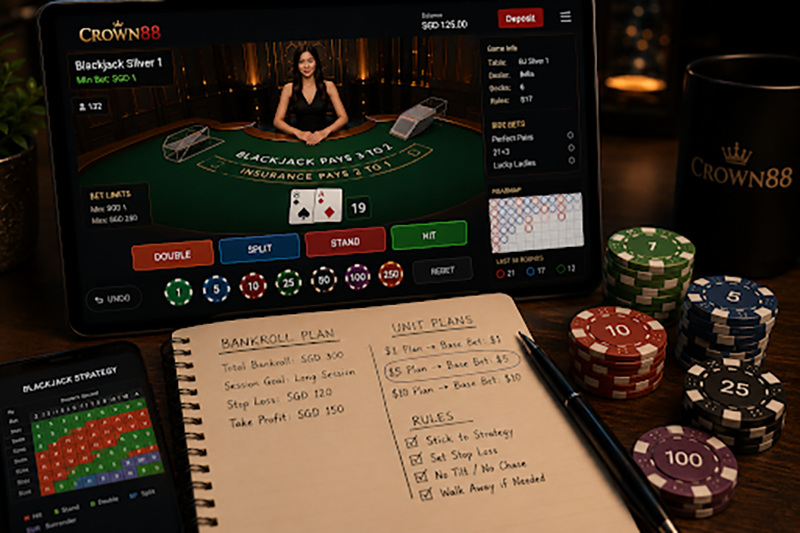
The Difference Between Playing Comfortable and Playing Pressured
This is one of the biggest differences I noticed rotating between low-stake and mid-stake blackjack tables.
Players using manageable unit structures tend to:
- stay longer inside sessions
- follow strategy more consistently
- avoid emotional progression betting
- make cleaner split and double decisions
Players using oversized units usually become reactive much faster. The betting pressure changes decision quality especially after several consecutive dealer wins. The psychological shift matters more than most blackjack players realise.
The $1 Unit Structure
This is usually where the smoothest small-bankroll blackjack sessions happen. The overall pace feels calmer. Losses remain manageable.
Winning streaks build gradually. Mistakes become less punishing. Most importantly, the session rarely feels emotionally heavy.
For players working with around SGD100 to SGD200 bankrolls, SGD1 units generally create enough breathing room to survive normal blackjack variance without constantly feeling pressured.
That becomes especially important on live blackjack tables where the game pace naturally encourages continuous betting.
Where $1 Units Usually Work Best
| Session Bankroll | Suggested Base Bet | Overall Session Feel |
| SGD100 | SGD1 | Very stable |
| SGD150 | SGD1 to SGD2 | Stable |
| SGD200 | SGD2 | Comfortable |
This structure usually suits:
- newer blackjack players
- casual evening sessions
- mobile blackjack play
- longer low-pressure sessions
- players testing new tables
One thing that stands out with smaller-unit blackjack sessions on Crown88 is how much easier it becomes to simply stay patient.
The session flows differently when every hand does not feel financially significant. The downside, naturally, is pacing. Profits build more slowly. But for many smaller bankroll players, stability matters more than aggressive short-term swings.
The $5 Unit Structure
This is usually the transition point where blackjack sessions start feeling more serious. The bankroll swings become more noticeable immediately. One failed split and double sequence can suddenly create SGD20 to SGD40 movement within minutes. That sounds manageable on paper.
Inside an actual session, it feels very different. Still, this range tends to be the most balanced structure overall for regular blackjack players who already understand session pacing properly.
The $5 structure usually provides a decent middle ground between:
- session longevity
- meaningful wins
- manageable volatility
- reasonable emotional control
But bankroll preparation matters heavily here.
Personally, I would rarely approach SGD5 blackjack units with a shallow session bankroll. Blackjack variance becomes much less forgiving once the hands start scaling.
Typical $5 Blackjack Session Structure
| Session Bankroll | Base Bet | Volatility Level |
| SGD300 | SGD5 | Moderate |
| SGD500 | SGD5 | Controlled |
| SGD800 | SGD5 to SGD10 | Medium |
This range generally works better for players already comfortable with:
- proper doubling discipline
- split restraint
- session stop-loss limits
- avoiding emotional chasing
Without those fundamentals, even mid-sized blackjack units can spiral quickly during bad dealer runs.
The Hidden Problem With Mid-Stake Blackjack
A lot of players become overly confident after short winning streaks. This happens constantly.
Someone starts with SGD1 units. Wins several hands. Moves to SGD5. Then suddenly jumps to SGD10 because the bankroll temporarily increased.
The session structure changes instantly. The emotional pressure changes too. That is where many controlled sessions start becoming unstable.
The smoother blackjack sessions usually come from maintaining consistent unit structures rather than constantly resizing bets based on short-term momentum.
The $10 Unit Structure
This is where blackjack sessions become psychologically demanding. Even experienced players feel pressure here during extended losing sequences. And blackjack absolutely produces losing sequences especially during aggressive dealer stretches.
At SGD10 units, players usually start reacting differently after losses:
- progression betting increases faster
- split decisions become emotionally influenced
- sessions extend longer than planned
- discipline starts weakening after variance builds
That becomes amplified during live blackjack sessions because the pace keeps moving continuously. The dealer does not slow down simply because the session turned volatile.
Typical $10 Unit Setup
| Session Bankroll | Base Bet | Session Risk |
| SGD800 | SGD10 | Medium to High |
| SGD1,000+ | SGD10 | Controlled |
| SGD1,500+ | SGD10 to SGD20 | Moderate |
The overall session intensity changes heavily at this level. Wins accelerate. Losses accelerate too.
For players who already have disciplined bankroll structures and strong emotional control, the pacing may still feel manageable.
For smaller bankroll players forcing larger units too early, sessions usually become unstable very quickly.

Some Blackjack Tables Naturally Feel Easier To Manage
This becomes noticeable after rotating through enough live blackjack tables. Certain table environments naturally support smoother low-to-mid stake sessions better than others.
The blackjack tables I usually return to on Crown88 tend to have:
- lower minimum limits
- cleaner interface layouts
- comfortable betting timers
- steady dealing pace
- stable stream quality
- less distracting visual clutter
That overall environment matters more during smaller bankroll sessions because players are usually aiming for longer session duration rather than rapid high-risk play.
Fast-paced tables combined with oversized units often create rushed decisions. It always happens late at night when fatigue starts affecting judgment.
Smaller Units Usually Improve Decision Quality
This is something many blackjack players underestimate. Decision-making changes once the unit size feels emotionally “heavy”.
A player who comfortably doubles on SGD1 units may suddenly hesitate doing the exact same mathematically correct play at SGD10 units. The hesitation changes long-term session quality.
The calmer blackjack sessions usually happen when players remain financially comfortable enough to continue following proper decisions consistently which becomes harder once the unit structure exceeds the bankroll’s comfort zone.
Which Unit Structure Makes The Most Sense?
For most smaller bankroll blackjack players on Crown88, the smoother starting point usually comes from lower-pressure structures first.
$1 Units
Better for:
- newer players
- low-pressure sessions
- longer playtime
- learning live blackjack pacing
$5 Units
Better for:
- regular players
- balanced volatility
- moderate bankrolls
- more engaging session movement
$10 Units
Better for:
- experienced players
- larger session bankrolls
- disciplined stop-loss structures
- players comfortable with heavier swings
There is no universal “best” blackjack unit size. The better structure is usually the one that still feels manageable during bad stretches. That matters long term.
Final Thoughts
Most blackjack bankroll mistakes happen before the first hand is dealt.
Players oversize their units. They underestimate variance. They chase stronger profit pacing before the bankroll structure is ready.
Blackjack sessions generally feel much smoother when the unit sizing matches the actual bankroll comfortably.
After spending more time across blackjack tables on Crown88, smaller and more controlled unit structures consistently produced more manageable long-term sessions overall.
Sometimes lowering the base unit before the session even starts is already the smartest adjustment a blackjack player can make.